
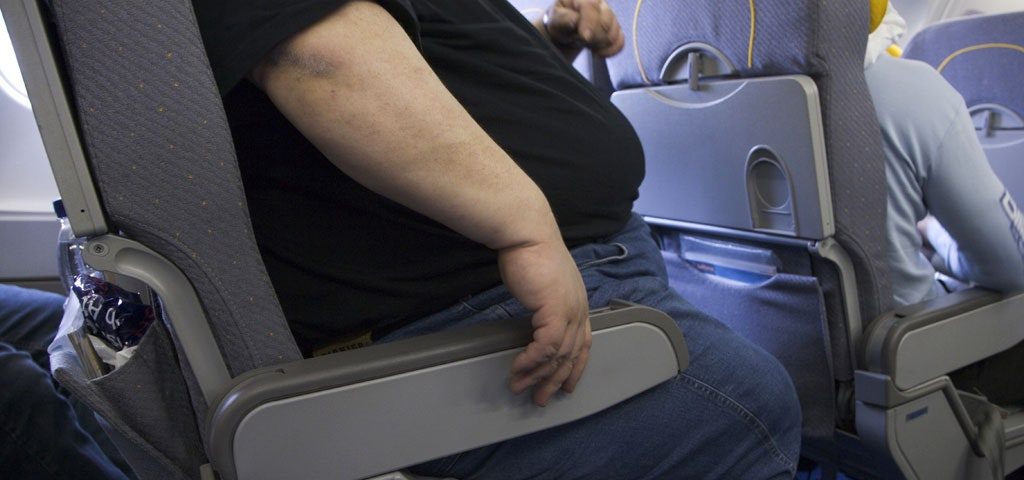

Emirates Airline not to blame for death of obese passenger
This article is written in response to the ETN publication of 22nd November 2014 titled, “Emirates Airline blamed for death of obese passenger”.
For the record, I am neither an employee nor spokesperson for Emirates Airline. This article is written in my capacity as a Lawyer and Aviation Safety Professional.
It was stated in that article that, “Family members of the late Sande Jacob Mremi, a resident of Dare salaam, pointed a finger to Emirates Airlines for failing to board him for treatment in India” They further alleged that Emirates reneged on its contractual obligation by failing to board the obese passenger who had paid USD 13,800 and was in possession of a confirmed ticket.
According to the article, the deceased weighed 250 kilograms. Emirates Tanzania managers said the airline would have to “uproot” at least six seats in order for engineers to create a seat that would permit the deceased to fly safely and comfortably.
The article requires one to appreciate the international and national regulatory framework that governs safe transportation of passengers by operators engaged in international air transport, and for purposes of this article, Emirates Airline.
All Contracting States engaged in International Commercial Air Transport must comply with the Standards and Recommended Practices (SARPS) in the Convention on International Civil Aviation (1944) and annexes thereto. Of particular importance is Article 37 of the Convention and Annex 6 (Operation of Aircraft). Contracting States have a duty to ensure that operators engaged in commercial air transport operations, both scheduled and non-scheduled, meet the minimum standards acceptable to ensure safety while conducting air navigation.
Part one of Annex 6 (International Commercial Air Transport-Aeroplanes) provides SARPS for safe operation of aeroplanes. It is a mandatory requirement under Chapter 6.2 (d) for all aeroplanes to have seats, seat belts and safety harnesses (for flight crew members). In addition, passengers should be informed when and how to fasten seatbelts, operate life jackets, how to open the emergency exits and quickly exit the aircraft in case of an emergency.
Emirates Airline is registered in the United Arab Emirates (U.A.E) – a contracting state. The airline is governed by Regulations made under authority of the General Civil Aviation Authority (G.C.A.A) in particular, and as far as is relevant to this article, Civil Aviation Regulation Part IV, (Aircraft Operations) CAR-OPS 1; Commercial and Private Air Transportation (Aeroplanes)[1]. These regulations are equivalent to Part 1 of Annex 6 and set the standards for safe operation of U.A.E registered aircraft.
Regulation 1.320 (b) (1) requires passengers, to secure their seat belts while seated during taxing, takeoff, landing or whenever deemed necessary in the interest of safety.
By necessary implication, passengers should be able to fit within the available seats. Even if Emirates had “uprooted” six seats, it would have had to provide a large seat with a seat belt to secure the deceased in order for the flight commander to comply with the requirements of CAR-OPS 1.
Regulation 1.260 provides for carriage of Persons with Reduced Mobility (PRM). However, carriage of such persons is subject to the terms of the Air Operator Certificate issued to Emirates by G.C.A.A, and must not jeopardize safety of other passengers, especially if their presence is likely to impede emergency evacuation of the aeroplane.
Modifications to the aeroplane, if any, would have to be done within the parameters of the regulations and Air Operator Certificate. In my opinion, Emirates probably considered the costs involved. Up to four aircraft would have seats “uprooted” and fitted with a large seat plus seatbelt in order to accommodate Mr. Mremi for the trip from Dare salaam to India and back. In addition, it would have been a requirement for Emirates to provide a life jacket and put in place safety procedures to cater for a 250 kilogram adult.
The deceased’s ticket was issued subject to Emirates conditions of contract[2], according to which, carriage and other services performed by the carrier are subject to the carrier’s conditions of carriage and related regulations.
The basis for charging USD 13,800 (assuming that is what was charged), more than what other airlines charge is not known. However, ticket purchase did not guarantee boarding permission. It all came down to the commander in charge of the aeroplane to decide whether carrying such a passenger was in line with related regulations governing the airline’s operations.
Mr. Mremi’s death was unfortunate, but airlines follow stringent guidelines to ensure compliance with safety regulations. In the circumstances, it is wrong to point fingers of blame at Emirates or accuse the airline of neglect.
[1]https://www.gcaa.gov.ae/en/ePublication/admin/Library%20Pdf/Civil%20Aviation%20Regulations%20(CARs)/CAR%20PART%20IV%20-%20OPERATIONS%20REGULATIONS/AIRCRAFT%20OPERATIONS/CAR-OPS%201%20-%20COMMERCIAL%20AND%20PRIVATE%20AIR%20TRANSPORTATION-AEROPLANES%20-%20ISSUE%2005.pdf
[2] http://www.emirates.com/english/images/conditions-of-contract_tcm233-431995.pdf